The Cabin Trip: Truths we find in Traditions

Updated: Jan 5

The drive to my Dad’s office is snow covered, the first of the year. I pull onto Rose Street, where his office building is tucked between a dentist’s office and a parking lot. My dad’s office is a white, square building with a standard two-slope roof and a single gable over the front door. On the triangular front of the gable, there is a blue oval sign that reads Law Office of David J. Clark, PC. On either side of the front door, there are windows with black shutters. The building is not large, just 1200 square feet, but the size of it now feels significant. It’s been in our family for more than thirty years. In the office parking lot, my dad’s two wheelchair accessible minivans sit, crusted in snow.
The minivans have been here for weeks now as my sister, Brandee, and I prepare to sell them. The list of things we must do to resolve my Dad’s final affairs is growing. Six weeks out from his sudden passing, and I’m burnt out, some strange brew of grief, responsibility, and the habitual duties of my day-to-day life seem to hang on the edge of an existential abyss.
When my mom died in 2014, I found a quote by C.S. Lewis that captured how I felt then. It reads, “Her absence is like the sky, spreading all over everything.”
It was a sense that the parameters of the world had shifted, things that once had shape now appeared formless. The rules, boundaries, safety, and governance she had set into my life no longer existed in an external form. The world had a new vastness that I would have to chart without her.
Though it felt as if the sky had fallen after my mom passed, there was still the ground, something under my feet to keep me rooted.
In the weeks sense my dad’s death, that ground seems to be receding, crumbling away to a looming precipice.
With my dad’s passing, the last of my forebearers have gone ahead. Great grandparents, grandparents, and now parents. There is a starkness to this notion. It is the feeling that I have been stripped of all else but my essential self. What once was a humming background tune, is now the only frequency I can hear. Every other task and perceived duty is muted behind a signal that cries: the only way forward is your own, there is no one else to lead, you are now the sky and the ground, and the path ahead is what you choose.
In the parking lot adjacent to my Dad’s office, I see Ron. Ron is a 2003 burgundy Ram pick-up with a 5.7 Liter Hemi engine. White vapor pumps into the frigid air from Ron’s tailpipe, and a rim of ice clings to the hilltopper.
I catch a clear glance of Andrew’s face as he sits in the inner warmth of Ron. He is laughing as I pull up in my minivan. There is both tragedy and comedy in the conditions of my arrival. This is true of every circumstance in life that brings us to our knees, and sorting through the comedy and the tragedy is a mark of humility. Andrew is the kind of friend that shows up in these moments to help determine the balance of each. He is not laughing at my misfortune so much as he is laughing at the misfortunes of life. I know this about him, and I can’t help but laugh too as I pull into the parking lot next to Ron.
I park the rental, a Chrysler Pacifica minivan, next to Ron. When I get out, Andrew steps out to greet me.
I say, “how you like this line up of minivans?”
“It suits you,” He says and we hug. “How long until your truck is out of the shop?” He asks.
Two weeks prior, the furnace in my house went out. It was a cold November Saturday. No technicians were available until Monday. I took my truck up to the market for groceries and firewood. On the way home, I struck a deer. My truck was out of service. The government shut down killed flights and sucked up the rental car market. A minivan, the same year, make and model as my dad’s was my only option. I had told this story at a work function to a friend, to which he told me: “It’s funny, when my old man passed, everything started to break. Even after their dead, they are still teaching us lessons.” The truth of that was a hard pill to swallow.
Sanding next to Ron, with Andrew, I tell him the truck is expected to be out of the shop before Christmas.
“Someone is sending you a message.” Andrew says esoterically.
The sentiment strikes me the same way as it did when my friend from work offered it.
My throat thickens and I grab Andrew by the shoulder and nod.
It is a common theme that has been growing in my life. Here are these clear signs, moments that set you back on your heels, and force you to take notice. That part is apparent. But what to make of these moments? At the precipice of the created past and the uncreated future, I hear this question constantly whispering in my mind, “how do I read the signs? What direction will I go?”
And now, I am here, with my oldest friend, packing up his truck to head north.
From Traverse City, it is roughly two hours to the Mackinaw Bridge. We easily fill the time with conversation, and as the green pillars of the Mackinaw Bridge rise above the Great Lakes into an oily-blue, Monet-like sky, we both can feel the shift.
As we cross from Lower Michigan to the Upper Peninsula, we are entering a reality apart from everything current, a place where twenty years merge into one place and time. The true toll for crossing is that you can only bring what is in you, and the land on the other side is a mirror to reveal what that is.
“It’s been twenty-years since the first trip.” I tell Andrew as we cross.
He bends an eyebrow, leveling the thought.
“First trip was over our winter break in 2005, right after my birthday and right before yours.” I tell him.
His eyes make the calculation. “Fuck man. We’ve done it all together. I am so glad we are doing this.” He takes a soothing breath. “Every time I cross this bridge, I feel like I shed ten pounds off my shoulders.” He says.
“Me too.” I tell him.
From the bridge, it is another hour and a half to Manistique, MI. We make a pit stop for groceries. Getting our supplies right has been an evolving art over twenty years, but this year we are decisive and quick. We don’t need much. The sun fades in the southwest as we make the final push of our drive to the cabin entrance.
As we turn down County Road 455, the world is solemn, tucked inside the desolate white fleece of snow that clings even to the skeletal trees. A sign that reads Donaldson’s BAR-D marks the entrance. The front gate is open. We pull onto a line of tracks in the snow that leads into the property and park.
“We should have a cheers.” Andrew says.
Traditions are traditions. We get out and grab a beer from the cooler in the bed of the truck.
Settled back in the warmth of Ron, we cracked the cans.
“To your dad.” Andrew says.
Twenty years of entering the Donaldson’s BAR-D crash over me. This place has become my looking-glass, a world that reflects a side of myself I could not otherwise see.
“To all the men in our families that came before us.” I say to Andrew.
We drink. The first quaff is a yeasty balm.
The drive into the cabin is a quarter mile of mesic forest and cedar swamp. Root collars twist in the land like Celtic knots. Ron’s new tires grip the snowy trail like drive sprockets on a war tank. Halfway into the property, a small herd of whitetail does solidify into statues. We stop and watch them. Our hunting rifles are in the back of the truck. There is no need for them. This year, there is a restriction on doe due to the growing wolf population.
“If they were legal, we would never see them.” Andrew says.
At the front of the property, which ends at the western shores of Indian Lake, the forest yields to a clearing the length of two football fields. To the south, there is a cabin that belongs to Andrew’s uncle, Doug. The lights of the cabin form an iridescent glow in the settling gray of ensuing dusk, and a thin ribbon of chimney smoke rises into the purpling sky. On the ride up, Doug offered us a steak dinner. We accepted the offer knowing we would have little time to prepare dinner ourselves. We have work to do, anyway. At the main cabin, there is no guarantee of common comforts like running water or gas heat.
As we turn into the property, the original cabin sits in the northwest corner of the forest cutaway. It is from the timber baren era, built by Andrew’s great grandpa Leonard.
Inside the cabin, there is a three-ring binder about Leonard’s life. On the cover, there is a picture of young Leonard in his military garbs that bears a striking resemblance to my friend.
Beyond the cabin, the lawns give way to an embankment lined by the remaining forest that clings there. And below the embankment, there are the steely waters of Indian Lake. They have the quicksilver luster of water about to freeze. Andrew pulls Ron in toward the pole barn that houses the Willy’s Jeep and a bunk house with a pool room. Next to the cords of stacked firewood, there is a shed that Andrew’s dad, Bruce, converted into a cedar lined, wood burning sauna.
We back Ron up to the cabin to unload our gear and make camp for the next three nights. It strikes me then, the privilege these lands have been for me. The cabin has been a training ground, a place to test my metal and sharpen my blade.
At the cabin, I learned how to hunt, how to tune into the frequency of the woods, to see with a hunter’s eye, to calm my breath, true my hands, and squeeze the trigger on a kill shot.
At the cabin, I learned how to pray not by ritual, but directly to God; to hear his voice in the rustle of the woods, to see his face in a silver, winter moon, and to feel his spirit in the stillness of dawn.
At the cabin, I learned the virtue of being a good guest, the value of leaving a place better than you found it: cleanliness, attention to detail, following procedure, and having a light tread.
At the cabin, I learned to hone my creative talents. The first time I cooked a duck breast properly was on an old cast iron over the flame of a thirty-year-old gas stove. The first novel I wrote through characters and scene rather than single voice narration was drafted at the cabin dining table.
At the cabin, I learned the virtue of doing hard things as regular habits, harvesting firewood from the forest, making camp, restricting comfort, running my first 5K through the spring snow slop of the forest.
At the cabin, I learned the importance of self-care, the restorative effects of laughter, sauna and cold therapy, eating well, fasting, hydration, and maintaining physical strength.
At the cabin, sport continues in my life. Over the years, we have played football, road dirt bikes, shot skeet, shot pool, played bocce ball, shuffleboard, and badminton.
At the cabin, I learned to be a mechanic: understanding the systems and processes of an engine, the operation of manual transmission, the value of good tools, the savvy of leverage, the pressure points of metals before they strip, the importance of a winch in the woods, and the way a warm engine sounds after an oil change.
At the cabin, I learned strategy and vision. We play chess, discuss business, get clear on goals and how to measure success.
The ultimate truth about a cabin trip is this: everything you think you are will be tested, and you will be forced to take new stock in yourself.
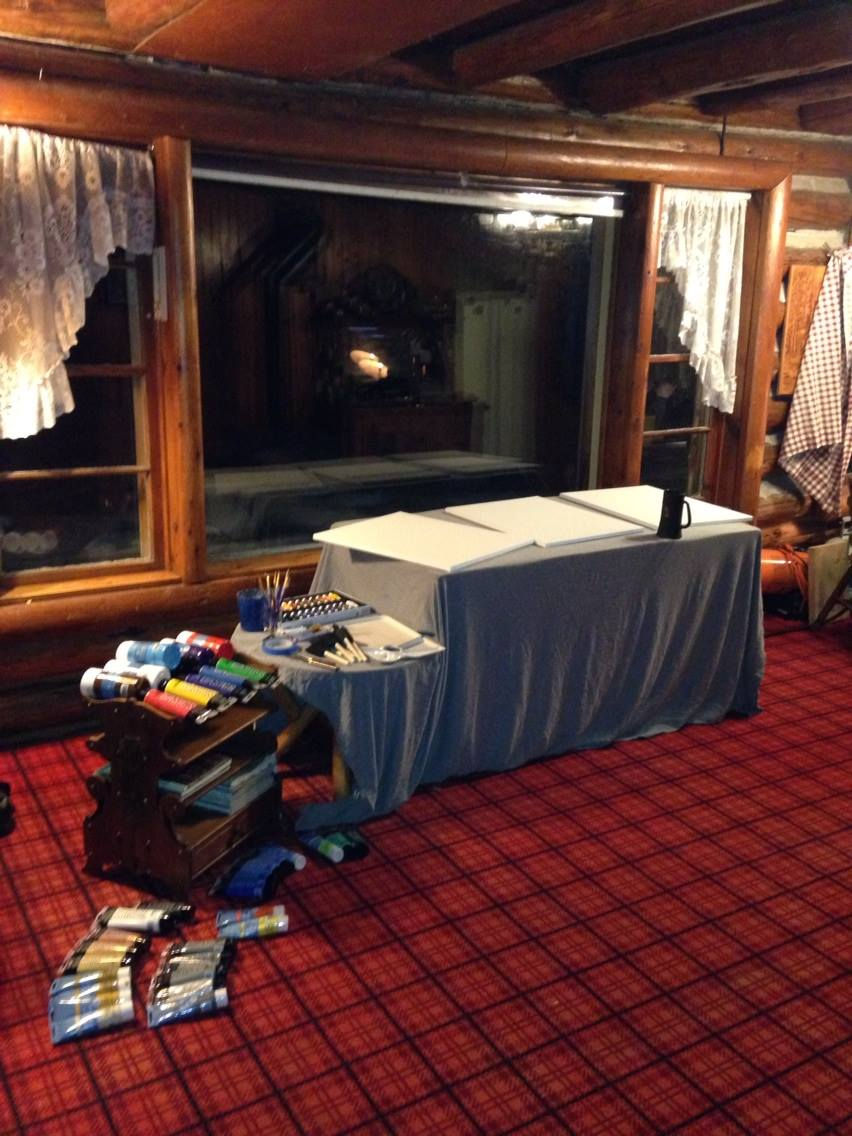
When Andrew and I decided to take a cabin trip this year, we were hopeful that we would each have time to work on our art. For Andrew that is building his brand around his water color paintings. For me, it is to work on a new novel. But the circumstance of life has a way of squeezing in at the edges. And there are truths we must each grapple with while we are here this year. For Andrew, it is a question about his role in the stewardship of the cabin going forward. For me, it is a question of carrying my parents’ legacy while also finding my own path forward.
On the second morning of our trip, I sit alone in the sauna mulling on these thoughts. When I step outside to a blast of subzero wind, Uncle Doug is walking by with his dogs. He says something about Greek gods that I can’t quite make out.
The comment sits with me as I go up to the cabin. Greek gods? I think to myself.
Greek virtue centers on the term Arete, which essentially translates as excellence. It means to be blade-like, or sharp. And that is what this is all about. Cabin trips with Andrew remind me of our Homeric value. Here we have become men that could have stood aside Achillies, Hector, Ajax, and Odysseus. I can see that whatever awaits me next, I have built the skills to navigate it.
After three days of camp at the cabin, we end the trip by taking Doug and his wife, Paula, to dinner. We eat burgers, sip IPAs and recount the past.
Before the cabin, there had been Doug’s boat, harbored in West Grand Traverse Bay. Andrew and I were in our first years of college then, home for the summers, sneaking on the boat late at night to listen to Joe Cocker, play chess, and drink a six pack.
Between the stories and laughter, Paula turns to me. “I am reading your book.” She tells me.
“Oh?” I am surprised.
“It’s really good.”
“Prosperity?” I ask.
She looks confused.
“The Way of Cain.” She says.
It is my most recent novel, not yet published. I had given Andrew a few copies to share with friends. Paula had found one of the manuscripts in the cabin.
She goes on to tell me the specifics that she has enjoyed, and it is clear she is well on her way to finishing it.
“I appreciate that.” I tell her.
“And your dad just died?” She asks.
“Yeah. About six weeks ago.”
“And your mom, too?”
I nod. “Of cancer, in 2014.”
Andrew lifts his eyes at me and conceals a grimace or a grin, maybe both.
“You guys had a house fire at one point too, isn’t that right?” Paula goes on.
I nod and smile.
Andrew laughs now.
“Yeah, that too.” I say.
“When was that?”
“In 2000.”
“What happened? Were you home?”
“We were at a basketball game in Charlevoix. I was a freshman. We got the call when we were there.”
“And you lost the house?”
“And two dogs.”
“They couldn’t put the fire out?”
“No hydrants that far out on the Peninsula. They had to drive up to the harbor for water. They ended up bringing in a crane to pull the house down so they could put it out.” I explain.
Silence follows and Paula takes this all in with a furrowed expression, and it is clear there is more on her mind. Andrew and Doug are both smiling, but no one is going to stop her from pulling the thread, including me.
“And your dad was a quadriplegic?” She goes on.
“He was.”
“For how long.”
“Little over fifty years. He was in a car crash with two friends when he was eighteen. He was in the back seat and was paralyzed. His best friend was in the passenger’s seat and died. The driver walked away with minor injuries.”
“Oh my. Was it their fault?”
“No, there was a giant pot hole in the road. A truck swerved around it and that caused the accident. The city was at fault for not tending to it properly.”
Doug interjects. “I didn’t realize he ended up working with Dean Rob.” Referencing a prominent attorney from the eighties.
“Dean gave my dad his first job out of law school.” I explain.
“He sued for malpractice, if I recall.” Doug goes on, a retired Northern Michigan attorney himself.
I nod. “After the accident, the city and the insurance company pushed a quick settlement that was far below what was right, given the accident and the Michigan insurance statutes. In law school my dad figured out he had been sold short. Dean helped him get a better settlement. He used that money to start his own law practice and invest in real estate.” I explain.
Doug nods solemnly.
“And your mom… I mean, how did they end up together?” Paula asks.
Andrew cuts in.“Highschool sweethearts. She stuck with him, took care of him. She was a saint.” Andrew says.
Paula’s face is grave. “Now that’s a story. When are you going to write that one?” She asks.
I laugh. “Yeah, I suppose it is. I've been thinking about it; it feels inevitable.”
Laughter and warmth circle the table.
Doug takes over, reciting poems from his college years from memory. He is a savant in his own right. His Greek god comment comes back to me then. He was once Andrew and I, a man in middle life pursuing excellence, faced with the same questions I find myself asking now. Our forebearers are gone. We remain. But time is short. It streams through us with the unrelenting pace of a forest brook. Doug knows this well.
The morning exit from the cabin is always a revelation. Time moves too fast. There are things left undone, unsaid, and unfelt. But we clean and we pack anyway.
By noon, Andrew and I are back to the Mackinaw Bridge. After paying the four-dollar toll, Ron’s wheels are humming on the steal grates of the bridge and the green guardrail posts whiz by the window. The gulf of water below, that merger of Lake Michigan and Lake Huron, spans to the horizon line. Time stops. Days, weeks, months, maybe years of thought, all solidify. Problems take a new form.
I am grateful. I am grateful to be settling my dad’s affairs with my sister, Brandee. I realize that we have never been closer. I am grateful to be going home to my kids, my girlfriend, Katie, and my dog, Fin. I am grateful to be going home to my shotty furnace and my rental minivan.
We all must face our own precipice moments in life. When we reach those cliffs, where there is no clear path ahead, we are forced to take measure of the significance of things. We stare out into the vastness knowing that the only way forward is to take the leap of faith. We must trust in the skills we have built, the relationships that shepherd us, and God’s plan.
The goodbye with Andrew is always short lived. Neither of us are one to dwell on it, and I arrived home in the late afternoon twilight of early December. My dog, Fin, has been staying with my sister and I make the mile drive up the Old Mission Peninsula to her home, the home our family rebuilt after the fire. I collect Fin and turn home. Back at home, I find my oldest daughter, Hadley, is there. She has dance class tonight; my youngest daughter, Emerson, is already there. My son, Aiden, will be home from his friend’s house soon. My girlfriend, Katie, will be over later. I shovel the driveway and collect the mail. In the stack of mail, there is a letter.
In the solemnness of my home, I open it and read the front cover:
Let God’s light guide you,
His love hold you,
And your faith in
Him sustain you
Now and in the days ahead.
I open the card. Inside is a standard line that reads: With sympathy and prayers. But also, there is a beautifully penned poem that reads:
Dear Adam,
With miraculous strength, your dad rose from his chair.
God and your mom were standing right there.
Together they walked hand in hand,
with the beauty of new beginnings in Heaven’s land.
Look to the sky and you will see,
Forever your mom and dad will be.
They are so very proud of you Adam! God is too!
You are a man of excellence in all aspects of your life!
Love,
Barb and Bruce
You are a treasure in Andrew’s life. We are grateful for you.
The card is from Andrew’s parents. I set it down with teary eyes. It is another sign, another moment that puts you back on your heels and forces you to take measure. I do take measure. All those questions about the signs and which direction to take that overtook me before the cabin trip are made clearer now. They are simply questions of faith. I am grateful for the reminder, and for friends and family that help guide me along the way.
I text Andrew to thank him for the trip and to make sure he thanks his parents for the card. Then I get back to it. Hadley will need to get to dance soon. There is plenty to tend to.




Comments